PART THREE — THE LAST PAGE
The final decision about the summer program was not made by Julian alone. He and Claire sat with Owen and made a list: fees, travel, safeguarding arrangements, schoolwork, and the responsibilities Owen would take on himself. Owen had already saved money from weekend editing jobs for a neighborhood shop. Claire offered to handle the travel documents; Julian could cover part of the fee if he adjusted a planned purchase. They checked the program's policies, talked to another family whose child had attended, and gave Owen room to ask questions. Permission became the result of a discussion rather than the reward for obeying a parent.
The separation went ahead. For a while, Julian slept in a small rented apartment where the walls were nearly empty and the kitchen light flickered. He missed Claire more sharply than he expected. There were evenings when he looked at his phone, wondering if he should send another message about their marriage, but he tried not to turn his own loneliness into her emergency. They coordinated school commitments, consulted professionals about their agreement, and spoke carefully in front of Owen. The process was imperfect and sometimes painful. Its value lay in giving all three people more honest room to breathe.
One Friday, Julian attended Owen's exhibition at the arts center. He arrived early and carried two bottles of water because he remembered his son often forgot one. The room held portraits, street scenes, and abstract images made by teenagers learning to see their neighborhoods differently. Owen's photograph of the hospital entrance hung near a window. A small printed description talked about waiting without knowing what comes next. Julian read it slowly. When Owen spotted him among the visitors, his smile was brief and shy, but Julian recognized it as a gift that needed no audience.
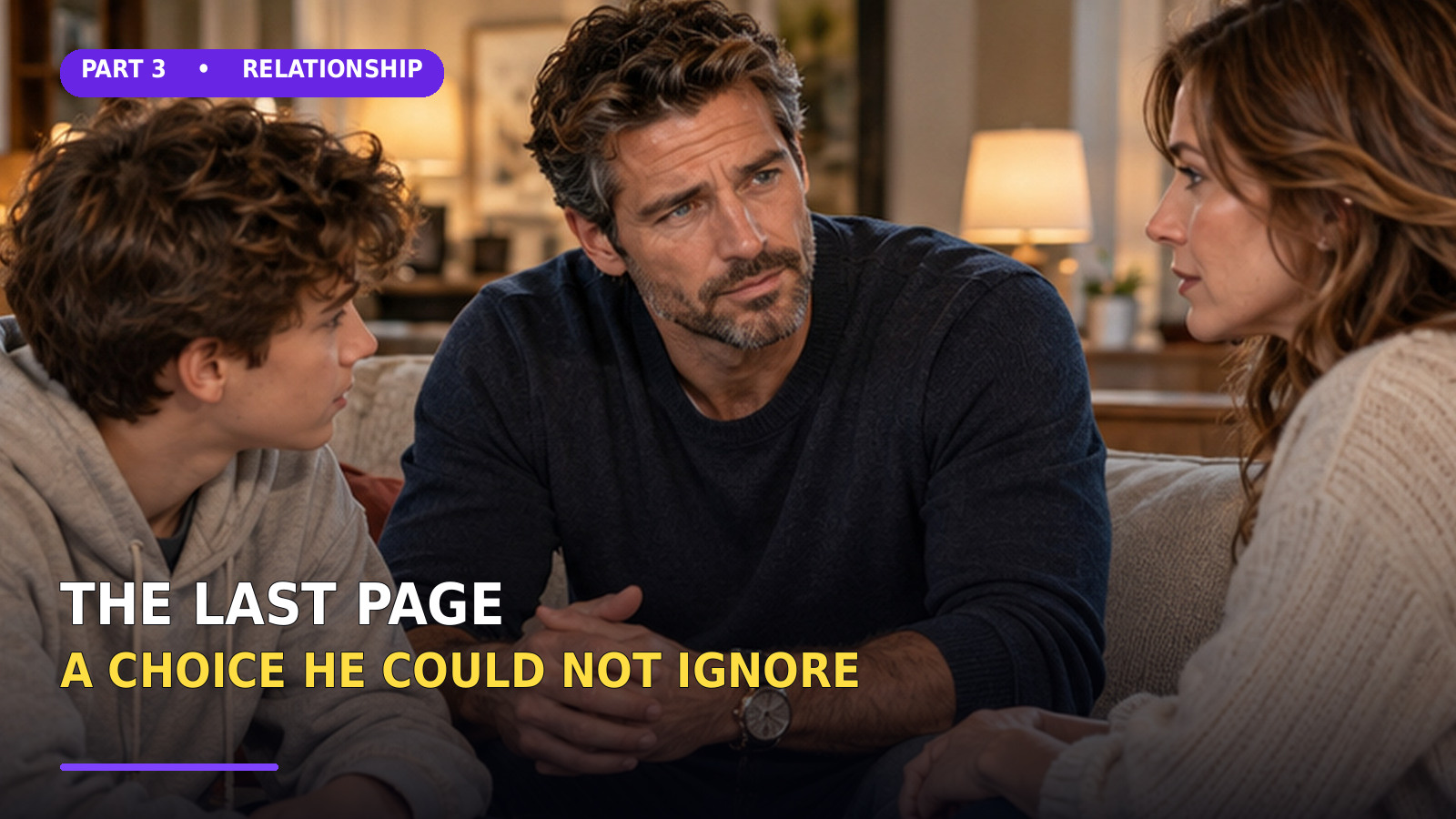
After the exhibition they walked through the city and stopped at a small noodle shop. Owen told him about a student who had argued that photographs should always tell the truth. Owen disagreed; the photographer, he said, chooses what to leave outside the frame. Julian asked whether he felt that way about Visitor. Owen considered the question. The picture was true for that moment, he said, but it did not show the time his dad waited in the rain to help him photograph the train station. Julian nodded. He was grateful his son remembered that day. He was also grateful Owen did not pretend one good memory erased everything else.
Claire saw the exhibition the next afternoon. She sent Julian a photograph of Owen standing beside his work and wrote, He seemed proud. Julian answered, He should be. The exchange was simple, but it carried none of the old struggle to be right. They had begun to speak as two adults trying to do a decent thing for the same child. Some weeks were harder. There were disagreements about transport and money, and a few conversations needed to be paused. Still, neither used Owen as a messenger. That boundary was worth protecting even when the marriage itself remained uncertain.
Three months after the envelope arrived, Julian discovered that the yellow sticky note had been moved into his briefcase pocket. He kept finding it among invoices and receipts. Please read everything before you call. At first those words had felt like an order from someone leaving him. Now they sounded almost like an invitation to pay attention before reacting. He placed it inside his notebook, beside a printed copy of Visitor. He had once measured his days by how many decisions he made before six. He was beginning to measure them by whether he had been truly available when it counted.
Owen returned from the summer program with a memory card full of photographs and a new way of talking about his future. He still did not know whether he wanted to study photography, design, or something else. Julian tried not to rush him toward certainty. They picked six images for a small book and argued cheerfully about which deserved the cover. Owen chose a quiet street at dawn. Julian preferred a portrait of an elderly fisherman. For once, disagreement felt safe. Neither needed to win in order to be heard. Owen eventually used both, placing the fisherman on the final page.
Julian and Claire did not announce a dramatic reconciliation. Their story was more complicated than that, and an honest ending did not require them to become a perfect couple again. They became more careful parents and more truthful people. Owen no longer had to send an image into silence and wait days for a reply. Sometimes his father answered with an actual question. Sometimes he came over to look. Sometimes they simply sat in the same room doing different things, and that was enough. Julian had built buildings that won awards, but one evening his son handed him a photograph and said, This one is for you, Dad. He understood that the most important part was not the picture. It was that Owen expected him to be there to receive it.