
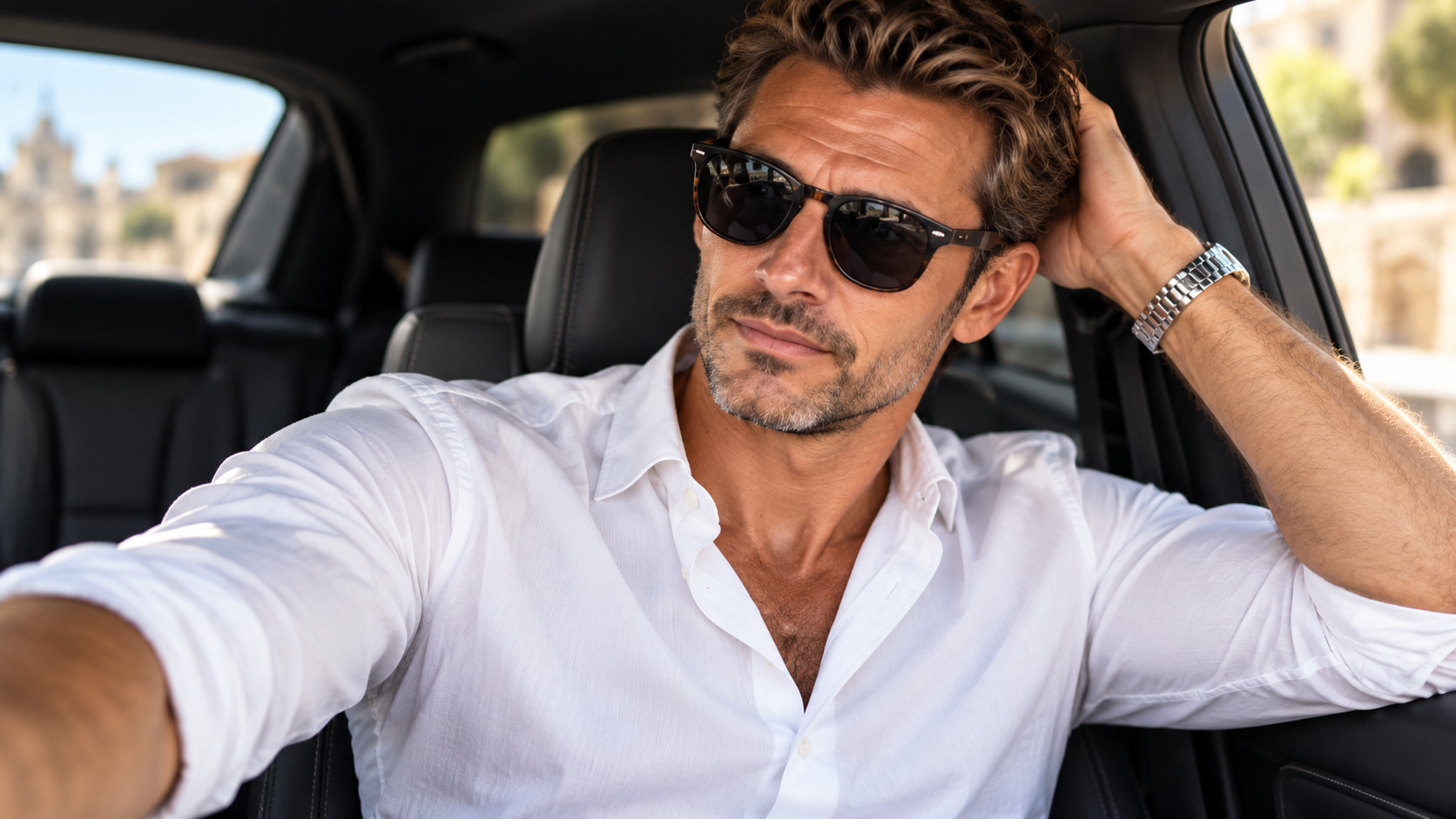
Illustrated editorial fiction: the character and events in this article are fictional. The portraits are AI-generated.
The handsome man who avoided the camera
Adrian was the kind of man whose friends could not understand why he disliked photographs. He was forty-two, had expressive eyes and knew how to put together an outfit without much effort. In conversation he seemed relaxed. He laughed easily, listened closely and looked confident walking into a room. But as soon as someone raised a phone, everything changed. His jaw tightened, his shoulders crept upward and his smile became strangely unfamiliar. When the group photo appeared later, he would search for himself and immediately decide that he looked awkward.
For years he blamed the camera. He disliked his profile, felt that some lenses distorted his face and wondered why he never looked as good in pictures as he did in the mirror. Sometimes those observations had a basis: camera distance and focal length can change the apparent proportions of a face, especially in close selfies. But the larger problem was that Adrian approached every picture as an exam. He was no longer participating in a moment. He was monitoring how he might appear to people who were not even present.
In this fictional editorial story, a photographer friend offered a simple experiment. They would spend an afternoon taking ordinary pictures, with no promise that any needed to be posted. The first photographs were deliberately unremarkable. Adrian walked toward the camera, sat with a coffee and leaned against a wall. His friend told him to look at something beyond the lens and breathe normally. She did not ask him to act handsome or hold an exaggerated pose. She wanted to capture the person who had been laughing comfortably a moment earlier.
When they reviewed the first set, Adrian noticed that his least favorite photos were usually those taken from too close or at moments when he was waiting stiffly for the shutter. In photographs where he was walking, listening or adjusting his jacket, he looked much more like himself. The conclusion was not that he had been unattractive before. It was that he had been relying on a method that made almost anyone uncomfortable. Good portraits, he began to see, were partly the result of positioning, timing and a relaxed relationship with the camera.
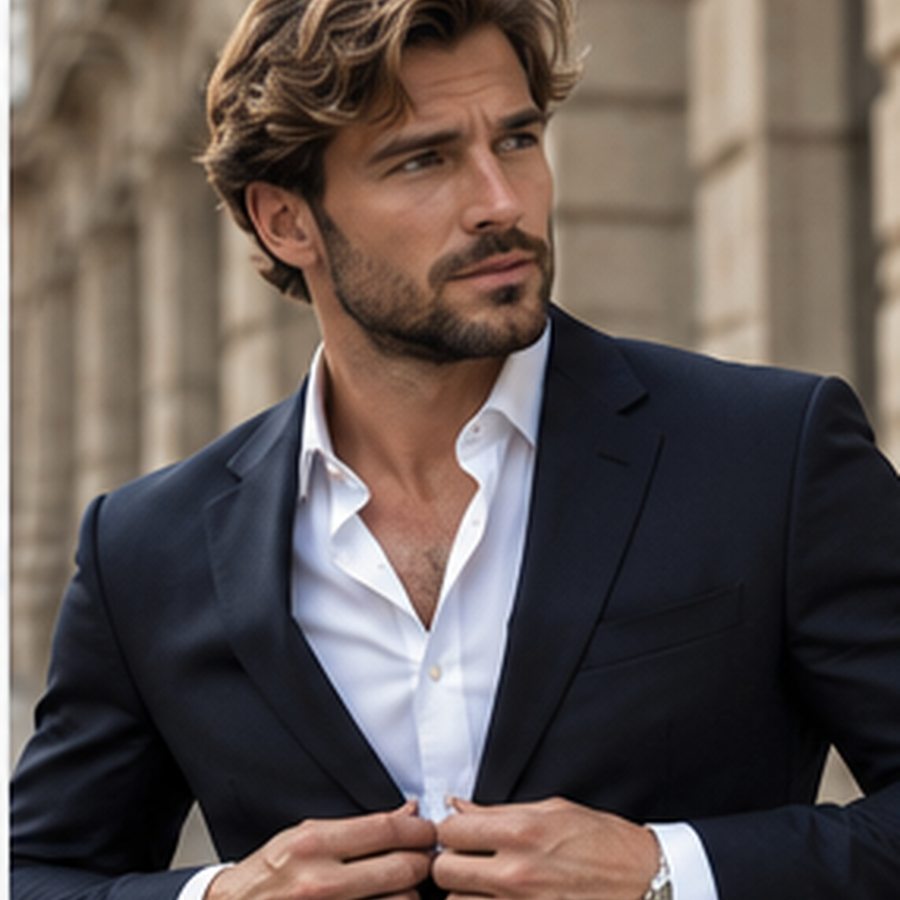
Light changes everything
The first technical lesson concerned light. His friend positioned him near an open doorway in soft daylight and then photographed him under a harsh overhead light. The difference was immediately obvious. In the softer image, his skin looked more even and his eyes caught a gentle reflection. Under the overhead light, stronger shadows appeared beneath his brow and nose. Neither photograph changed the face itself. Lighting simply altered which features the image emphasized. Learning to recognize flattering light offered a practical improvement without requiring filters.
The second lesson concerned distance. Close wide-angle selfies can exaggerate the features nearest to the camera. Instead of extending his arm a few inches from his face, Adrian tried having a friend stand farther away and use a portrait-friendly focal length. On a phone, stepping back and using an appropriate optical or modest digital zoom often produced a more natural perspective, though low-light quality can vary. The purpose was not to hide his face. It was to avoid unnecessary distortion and capture something closer to how people saw him in normal conversation.
The third lesson was about his body. He had habitually faced the camera squarely, arms rigid at his sides, unsure where to put his hands. His friend asked him to turn slightly, shift his weight comfortably and let one hand rest naturally on a pocket or jacket. She also encouraged him to lower his shoulders instead of pushing his chest forward unnaturally. These changes were small, but they made the pose feel less like a formal ID photograph. Movement—walking a few steps, turning toward a sound or looking up—helped too.
Most surprising was the lesson about expression. Adrian had thought a good portrait required a broad smile or a serious model face. His friend suggested neither. Instead, they kept talking between frames. When something genuinely amused him, she took the photo. The expression was subtle, but it reached his eyes. The resulting picture was not perfect in a technical sense; a few strands of hair were out of place. Yet he liked it. For the first time in years, he saw a photograph that resembled the version of himself his friends described.
His photographer friend also taught him to notice the effect of the phone itself. Cameras have different lenses, and some portrait modes create artificial background blur that can occasionally distort the edges of hair or glasses. Rather than assuming one setting was always best, they tried a few options and compared the results. Adrian learned to pay attention to the overall image instead of zooming in on a single line near his eyes. He wanted photographs that looked natural at a normal viewing distance, not images optimized for microscopic inspection.