Original fictional story. The characters and events are invented; images are AI-generated illustrations.
PART ONE — THE EMPTY DISPLAY
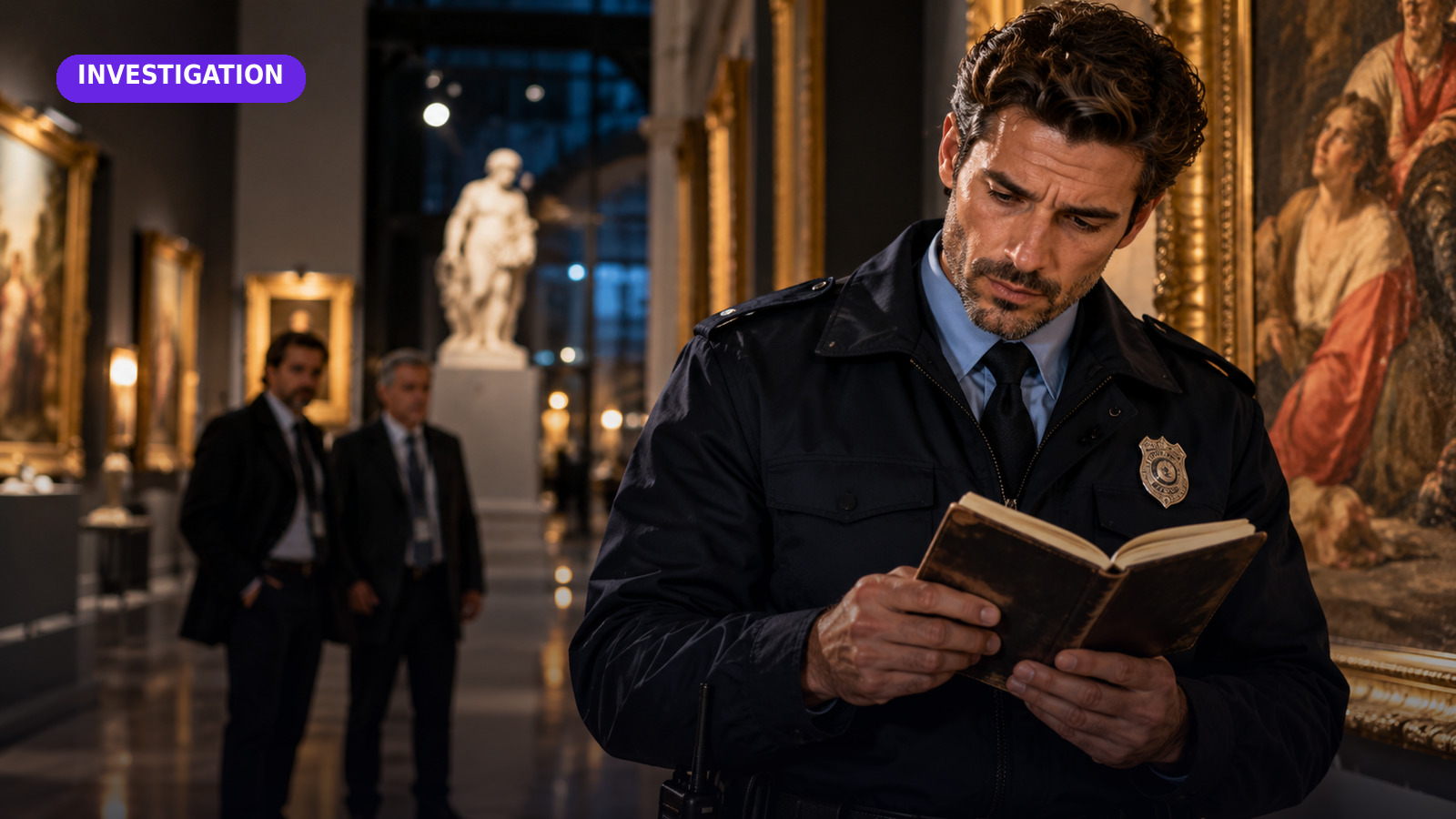
The museum doors closed at six, but Marcus Reed's working day began when visitors stopped taking photographs. Forty-five, broad-shouldered and almost painfully punctual, Marcus liked the quiet of the old maritime building after sunset. He knew the sound of its heating pipes, the security door that needed an extra push, and the tiny patch of roof that leaked when wind came from the east. He also knew every person who had ever stayed late to repair a display. His colleagues joked that he could run the museum blindfolded. He usually answered that it would be safer if nobody tried.
On a rainy Thursday, a silver navigation instrument vanished from a locked case in the Hall of Voyages. It was a small object, no bigger than a paperback, but donors had helped the museum acquire it and the director valued it at nearly two hundred thousand dollars. By eight the police had been called, a trustee was pacing in the lobby, and someone had printed the last access report. The electronic log showed Marcus entering the hall after closing. The next line showed the case alarm disabled. The director looked at him as if the report contained a confession. Marcus knew it did not.
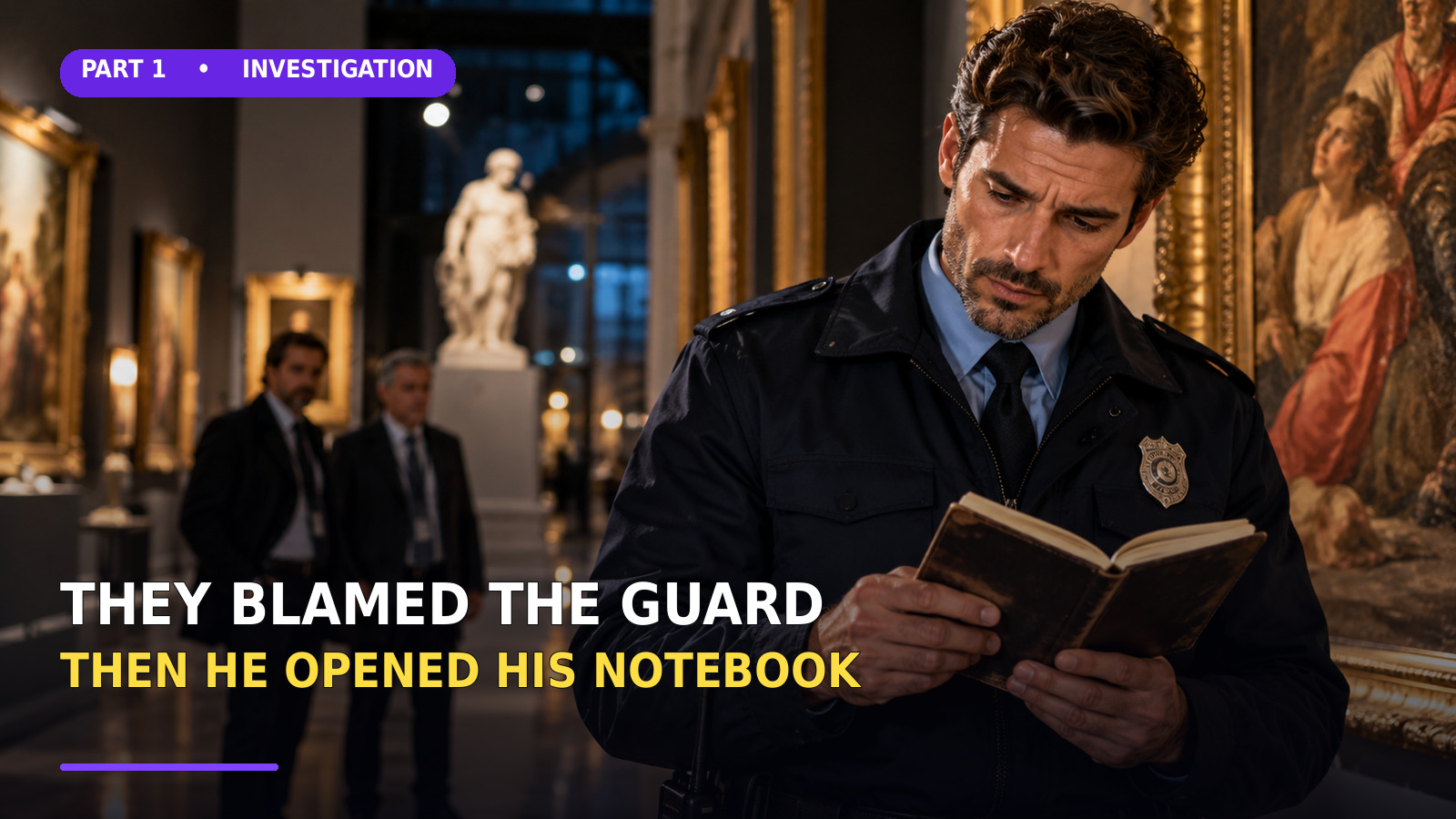
He had entered the hall to investigate a faulty sensor that had triggered twice during the afternoon. He remembered the time because he had written it in a spiral-bound notebook at the front desk, along with a note about a contractor carrying an unusually wide equipment case through the service corridor. Marcus kept handwritten logs even though the museum had an expensive digital system. During a storm the previous year, a power failure had erased several hours of electronic records. Since then he had trusted the computer for speed and paper for context. Neither habit had ever made him particularly popular with management.
The next morning the director asked Marcus to come into a conference room. A trustee named Leonard Vale sat at the table beside a human-resources representative. They spoke quietly and used polite words. There was a serious allegation, they said. There would be a suspension while the museum investigated. Marcus could return his access card and leave through the staff entrance. Vale asked him whether he had debts. Marcus, who paid his bills carefully and sent money to his mother when he could, understood exactly what kind of story was being suggested. He handed over the card but declined to speculate about his personal finances.
As he walked out, a visitor recognized him and waved. Marcus almost turned away. He had worn the same navy jacket for eight years. People in the neighborhood knew him as the man who greeted school groups and made sure elderly visitors had somewhere to sit. One accusation could not erase those years, he told himself. But by lunchtime a local blog was reporting that a security employee was under investigation in connection with the missing object. It did not name him, yet the comments quickly did. His phone filled with messages from people offering sympathy, demanding answers, or passing along rumors as though they were facts.
Marcus lived in a narrow apartment above a bakery, where the smell of bread arrived every morning before his alarm. His adult daughter, Leah, came over after reading the article. She worked in software support and had inherited his dislike of vague explanations. When Marcus told her the access report was incomplete, she asked whether he had kept his own record. The notebook, he realized, was still in a locked drawer at the security desk. The museum had collected his keys and identification but had not mentioned his paper logs. He wrote to the director requesting that the notebook be preserved. He also contacted an attorney through a community legal-referral service.
Leah wanted to post a furious response online. Marcus asked her not to. Anger would not tell them where the instrument had gone, and public accusations could harm people who might be innocent. Instead they began writing down what they knew: the sensor fault, the contractor, the unusual equipment case, the times Marcus entered and left the hall, and the employee who had witnessed the alarm. They separated confirmed details from memories they needed to check. Leah brought her father a large folder and a pack of sticky labels. For the first time in twenty-four hours, he felt he was doing something more useful than defending his reputation to strangers.
Then an email arrived from the museum's facilities supervisor. It was brief and carefully worded: I remember your report about the east corridor. I was told the camera there was offline for maintenance. Marcus stared at that sentence. The corridor camera had worked when he tested it at the start of his shift, and the maintenance schedule had shown no work in that area. He could not prove what had happened, but there was now a second discrepancy. He forwarded the message to his attorney. That evening, Leah asked whether he was frightened. Marcus looked at the notebook's empty place on his shelf and said, Yes. What frightened him most was that someone in a position of power appeared certain the story was already finished.