

Original fictional story. The characters and events are invented; images are AI-generated illustrations.
PART ONE — THE MESSAGE AT 6:14
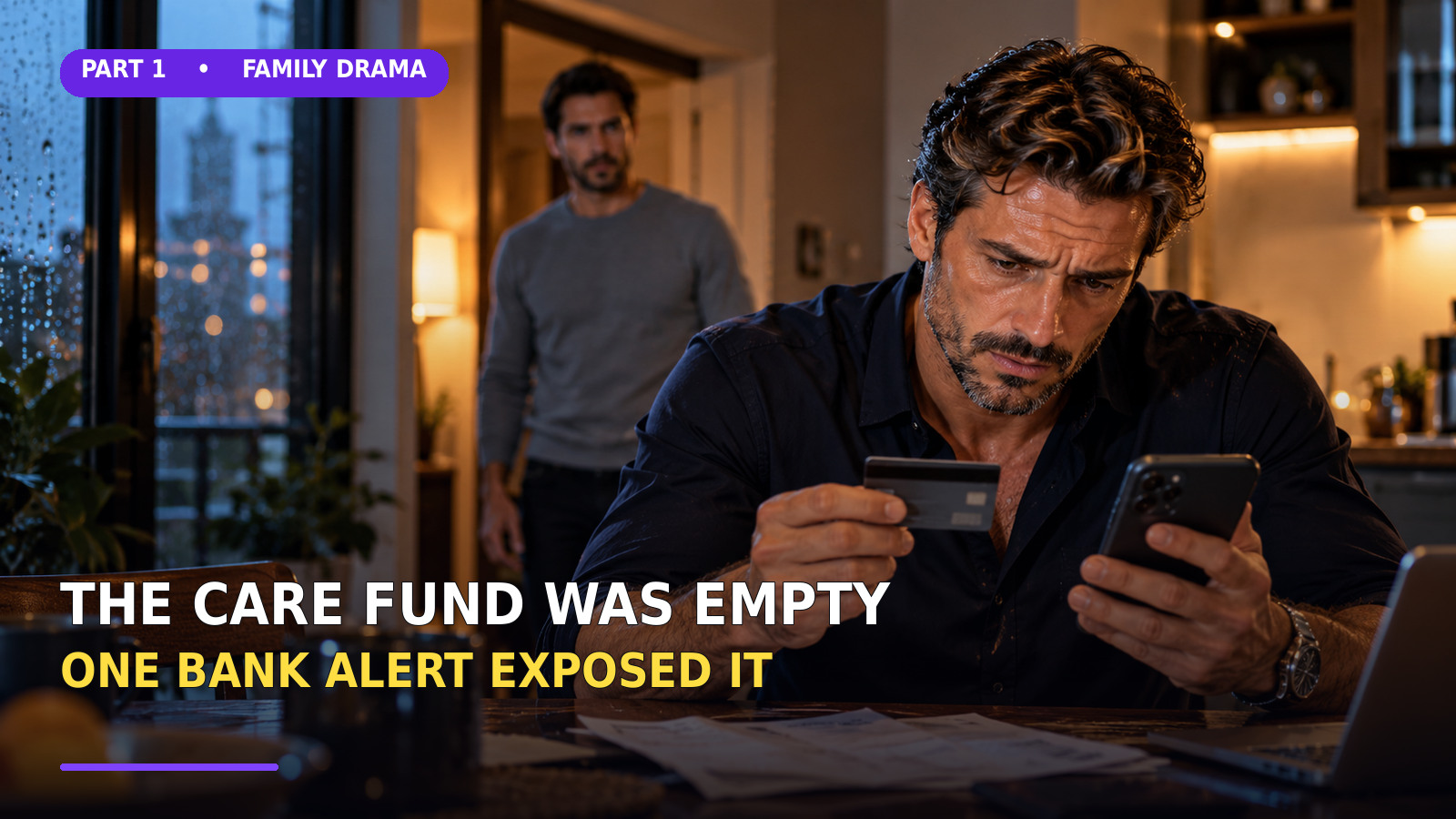
At 6:14 on a Sunday morning, Nathan Cole's phone lit up beside a half-finished cup of tea. An automatic bank notification said that a large transfer had left the account he and his brother used for their father's care. Nathan read it once, then again, wondering whether he had misunderstood the amount. He was forty, worked as a paramedic, and had spent the previous evening at the hospital with their father, who was recovering from a fall. The money in that account was meant for rehabilitation and help at home. It was not spare cash. Someone had moved almost all of it overnight.
Nathan called his younger brother, Ryan, who had promised to handle the paperwork while Nathan worked twelve-hour shifts. Ryan answered on the fifth ring. Before Nathan could finish explaining, Ryan said the transfer was temporary. He had moved the funds into a better account and would provide the details later. When Nathan asked which bank, Ryan grew irritated. You always assume I'm doing something wrong, he said. Dad trusted me to manage things. Nathan looked at the alert again. The transfer description included the name of a private company he had never heard of. It did not resemble an account set up for medical bills.
For years the brothers had occupied different roles. Nathan was the dependable one, the man who drove their father to appointments, collected prescriptions, and answered late-night calls. Ryan was charming, quick with ideas, and gifted at making every new plan sound like an opportunity. He organized family birthdays and persuaded their father to try new restaurants. Nathan loved him, but he knew their relationship included old resentments. Ryan believed his brother saw him as irresponsible. Nathan believed Ryan left practical problems for other people to solve. Neither had ever said those things as directly as they should have.
Their father, Harold, was seventy-two and still proud of having built a modest business repairing kitchen equipment. Since his fall he had needed help with walking, meals, and sorting the complicated documents that arrived from insurers and service providers. The brothers had agreed to create a separate account to cover the support he might need over the next year. Harold contributed much of his savings and asked both sons to monitor expenses. Ryan said he could manage transfers while Nathan arranged care. Nathan, exhausted from work, accepted the division without asking enough questions about access and approval limits.
By noon, Ryan had stopped returning messages. Nathan checked previous statements and found several smaller payments that he had assumed were reimbursements for household expenses. Their descriptions were vague: services, advance, management. The total was far larger than he remembered authorizing. He made screenshots and downloaded records from the bank's official portal. Then he called the bank using the number printed on his card, not any number that arrived by message. The representative could not discuss every detail without checking account authorities, but documented the concern and explained the bank's process for disputed or potentially unauthorized transactions.
Nathan wanted to drive straight to Ryan's apartment. Instead he went to see their father. Harold was sitting in an armchair, studying a crossword and trying to make his injured leg comfortable. Nathan explained that there was a problem with the care account and that the bank was reviewing it. He did not say Ryan was a thief; he did not yet know whether the transfers were fraudulent, reckless, or approved under an arrangement Nathan had forgotten. His father listened in silence. Then he asked a question that hurt Nathan more than any accusation: Will this mean I can't come home? Nathan pulled a chair closer and said they would focus first on keeping him safe.
At the kitchen table Nathan began preparing a separate budget. The rehabilitation clinic had provided a written estimate, the pharmacy could list recurring prescriptions, and the home-care agency had a schedule of fees. Together those figures made the missing money painfully concrete. What had looked like a number on a screen became six months of transport, therapy, and practical support. Nathan contacted a social worker about alternative funding while the bank investigated. He knew he could not solve a financial dispute by promising his father more than he could provide. Care required realistic planning, not reassurance built on wishful thinking.
That evening Ryan arrived unexpectedly with takeaway food, smiling as though the morning's argument had never happened. He asked Harold whether he had taken his medication, then told Nathan to stop causing unnecessary drama. The funds, he insisted, were in a short-term investment and would be available soon. Nathan asked to see the agreement. Ryan placed his phone face down and said it was confidential. Their father looked from one son to the other and withdrew into the crossword. Nathan felt the old temptation to keep peace by dropping the subject. Then another bank alert arrived, this time showing a payment to a company with Ryan's initials in its name. Nathan put the phone on the table. No one spoke for several seconds.