

What changed when he stopped waiting for company
By the second day, Owen had stopped mentally narrating every activity as “something I am doing alone.” He was simply having breakfast, visiting a small museum and walking to a viewpoint. The language shift mattered. He had treated being solo as a deficiency, as though an experience counted only when validated by someone beside him. Once that assumption loosened, the trip became lighter. He could take a wrong turn, correct it and laugh quietly. He could return to a place he liked without worrying that it was repetitive or uninteresting to another person.
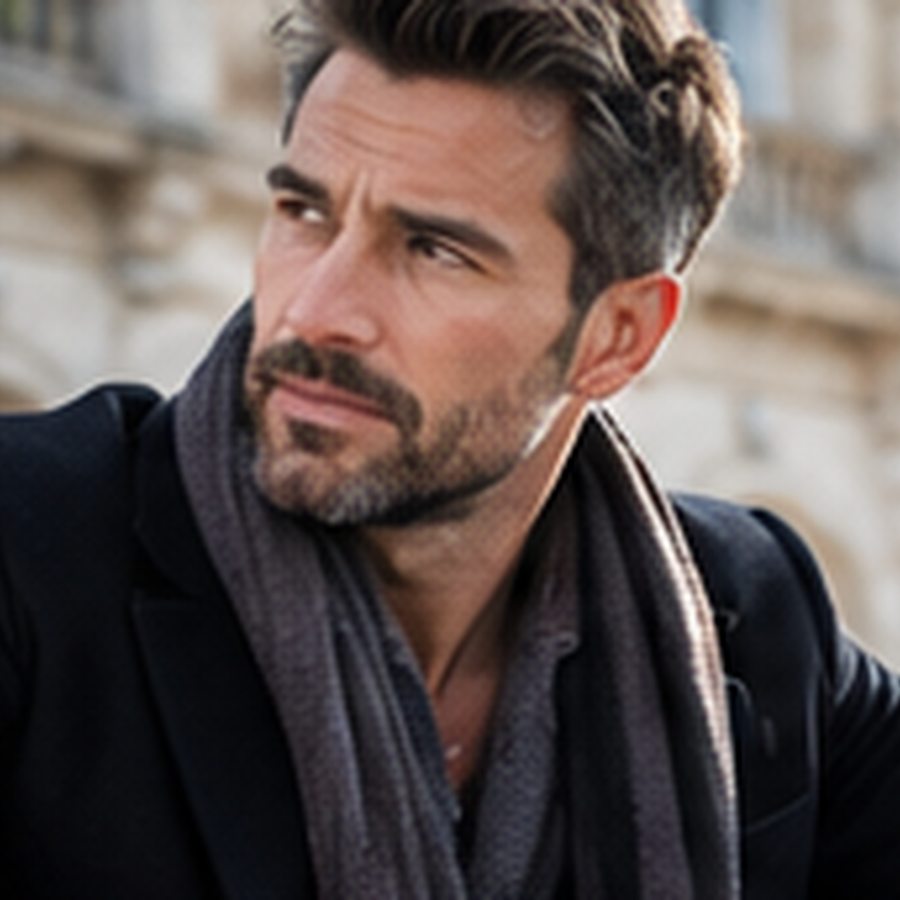
At a lookout over the water, he asked a passerby to take a portrait of him. In previous years he had avoided being photographed, especially as his face changed with age. This time he stood naturally, kept his shoulders relaxed and let the wind move his hair. The photograph was not a fashion campaign, but he looked handsome in a way that surprised him: less concerned with approval, more connected to the setting. He realized that some of the most attractive images capture a person doing something that genuinely interests them.
For men considering a first solo trip after forty or fifty, a short, manageable break is often more useful than an ambitious itinerary. Choose somewhere with straightforward travel arrangements and accommodation you can verify. Plan one meaningful activity for each day, then leave space for unplanned discoveries. Research local safety guidance and accessibility needs. If you want company, consider a class or guided tour. If you prefer quiet, bring a book and enjoy it. Good travel planning should remove avoidable stress without scheduling every spontaneous moment out of the journey.
Owen also learned that self-confidence does not eliminate loneliness. There was one evening when he wished he could send a photograph to someone who would understand why the place mattered. He did send it to a friend, and they exchanged a few messages. Then he returned to his walk. Traveling alone did not require acting as if relationships were unnecessary. It gave him a chance to relate to them differently: from enjoyment rather than dependence. He could appreciate good company without postponing every pleasure until company happened to be available.
Bringing the best part home
The hardest part of the trip, unexpectedly, was going back to his normal routine. Owen did not want the experience to become a brief story about a brave weekend followed by months of waiting. He made a list of what he had liked most: walking without rushing, noticing small places, reading in cafés and photographing ordinary details. None of those things required a plane ticket. Over the following weeks, he explored neighborhoods near home, visited a gallery by himself and occasionally took a different route simply because he was curious.
His friends said he looked happier in the photographs. Some commented on his style: the textured sweater, casual jacket and clean haircut made him look relaxed and assured. Owen appreciated the compliments, but he knew the clothes were not the whole reason. He had carried them for years. What changed was how he wore them. He was not trying to fill every silence or pose as a younger man. The images captured someone comfortable occupying his own afternoon, and that ease made a stronger impression than any elaborate outfit.
There are practical limits to the message. Not everyone can afford to travel, take time off or leave caregiving responsibilities. Solo travel may also require additional planning for health, mobility or personal safety. The underlying idea can still be adapted. An independent afternoon, a museum visit, a hike with appropriate preparation or a meal at a new local café can create the same small opportunity to make choices for oneself. Adventure does not have to be expensive or far away to feel meaningful.
Months later, the coastal photograph became Owen's favorite. It showed a fifty-year-old man looking toward the horizon, not because a perfect future waited there but because he was genuinely interested in what was beyond the next turn. The trip had not made him someone else. It had given him proof that he could enjoy life without waiting for ideal circumstances. When friends asked whether he would travel alone again, he smiled. He already had a shortlist of places. This time he was not waiting for anybody to decide whether they could join him.
Back home, he stopped treating every invitation as an all-or-nothing choice. If a friend wanted to join him on a future trip, that could be wonderful. If schedules failed to align, he could still go. He also respected situations where traveling alone would not be suitable, and researched locations accordingly. Independence was not a declaration that he no longer needed people. It was an added capability. He could enjoy companionship while knowing that meaningful experiences did not need to remain permanently postponed until someone else had exactly the same free weekend.