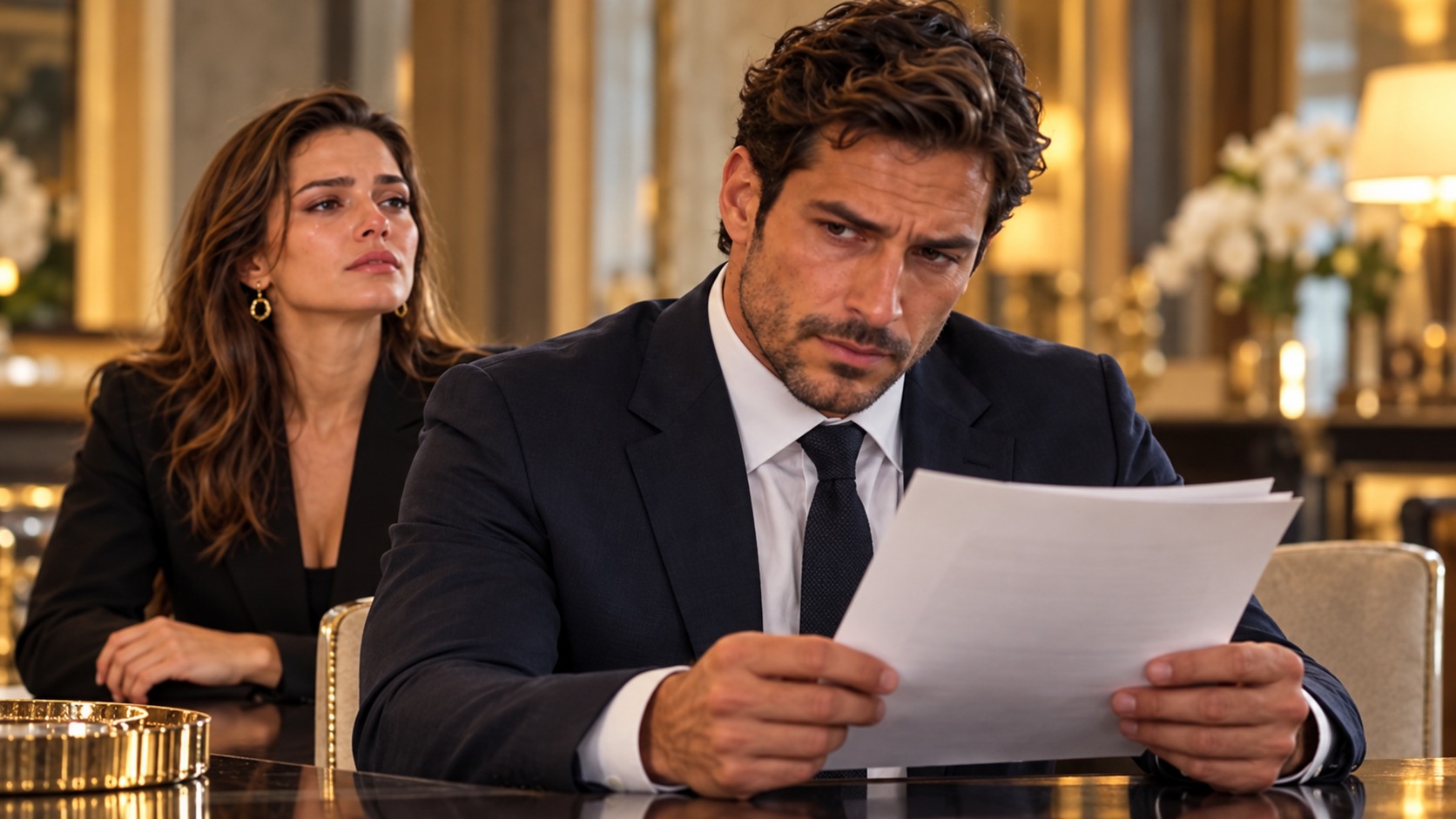
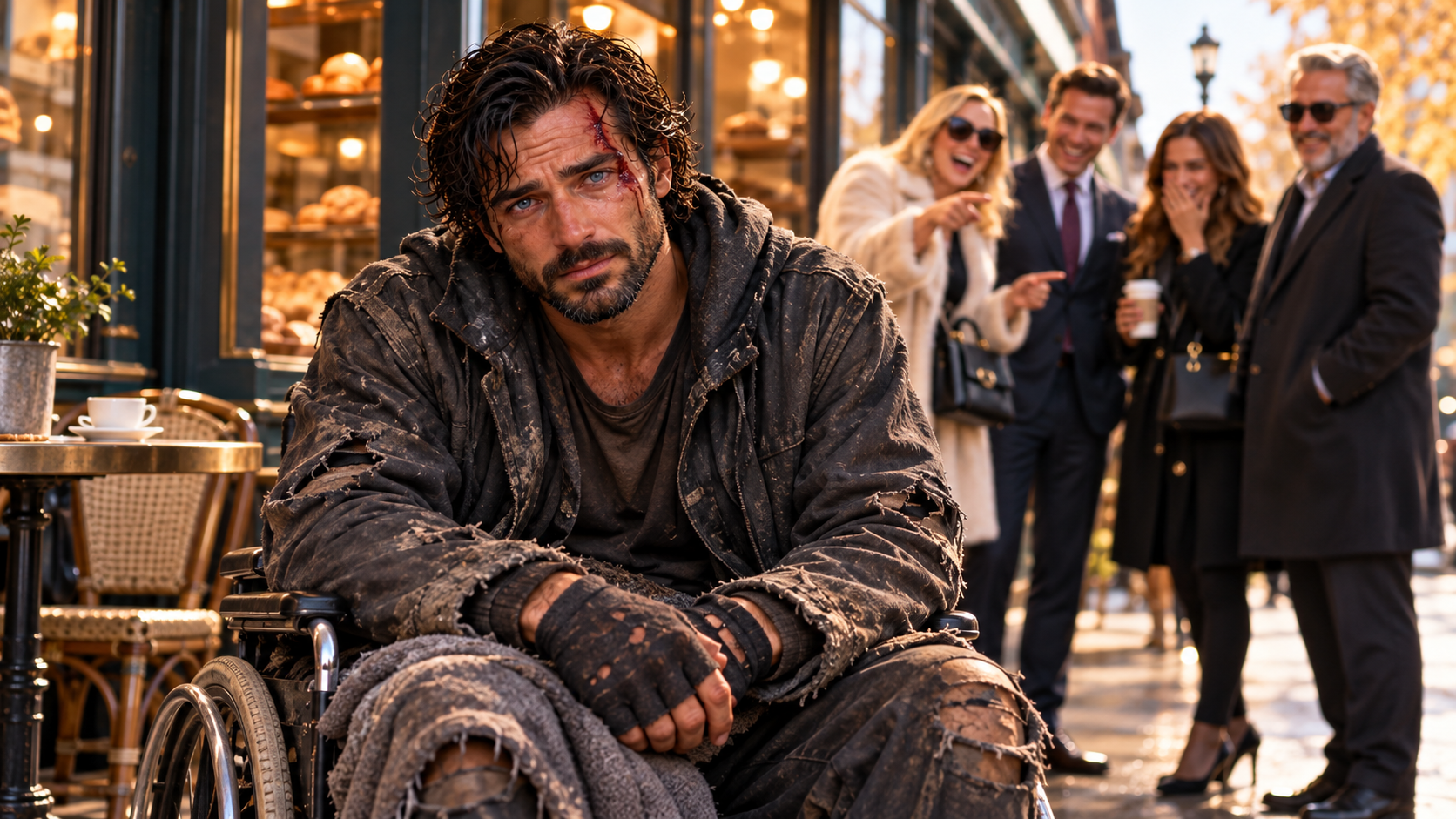
The first thing I heard was laughter.
Not the happy kind that comes from friends enjoying a beautiful afternoon. This was the kind of laughter that makes you wish you could disappear.
I was sitting in an old wheelchair outside a crowded café on Mariner’s Row, my jacket soaked from the rain, my trousers covered in mud, and a small cut still bleeding above my eyebrow.
A woman in an expensive cream coat stopped beside me.
“Are you waiting for somebody, sweetheart?” she asked.
Before I could answer, the man accompanying her smiled.
“Probably waiting for somebody to buy him a new wardrobe.”
The others laughed.
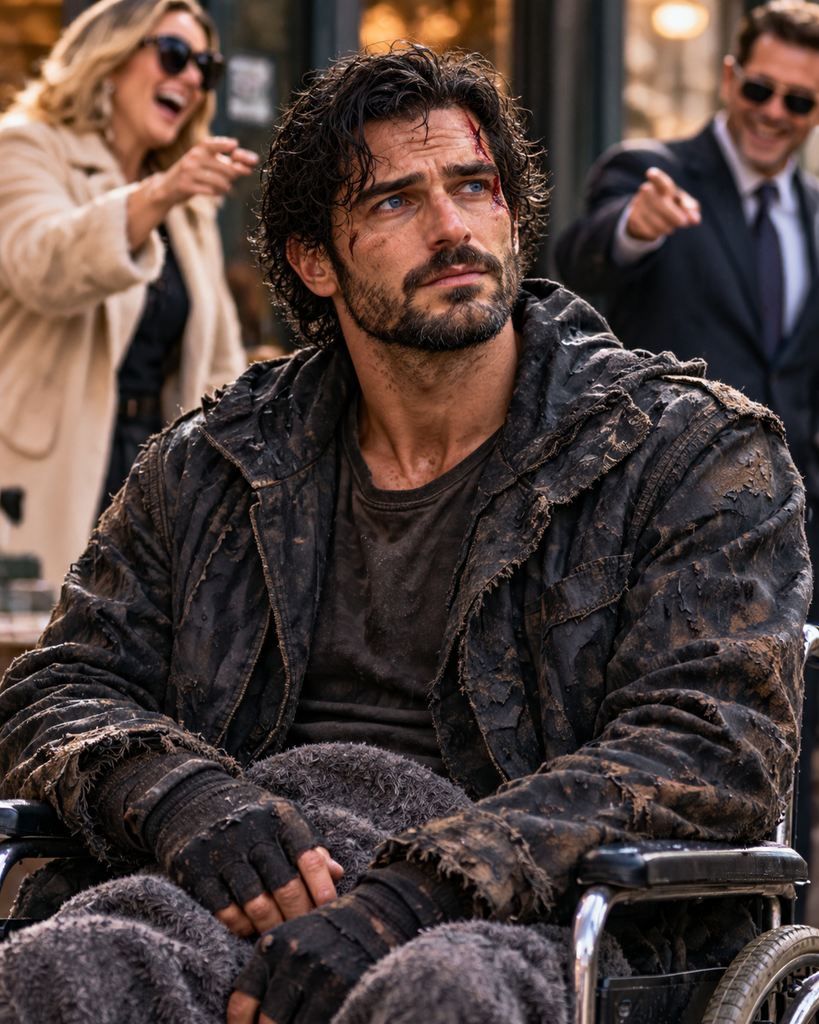
I lowered my eyes.
Six years ago, those same people would have stood when I entered a room. Today, they couldn’t even imagine that I had once sat across a boardroom table from men like them.
My name is Adrian Mercer.
I’m thirty-eight years old, and there was a time when my signature appeared on some of the most important engineering projects along the East Coast.
I had a beautiful apartment, a promising career, and a woman I was planning to marry.
Then came the night of the North Pier fire.
Everything changed.
The fire left five people dead, dozens injured, and an entire waterfront neighborhood grieving. By morning, newspapers were calling it one of the city’s worst construction disasters.
Within a week, my photograph was everywhere.
ADRIAN MERCER: THE ENGINEER WHO IGNORED THE WARNINGS.
That was the headline people remembered.
It didn’t matter that I had spent months trying to stop the project. It didn’t matter that my reports had been altered or that I’d nearly died trying to help people escape.
The public had already decided who was responsible.
The company dismissed me.
My fiancée left.
And after the injuries I suffered that night, I never regained the ability to walk.
For years, I stayed away from Mariner’s Row.
Until a letter arrived at my apartment three days earlier.
There was no return address.
Inside were two sentences, written on a small piece of paper.
They are going to demolish the last building that holds the truth. If you still want answers, come before Friday.
Underneath was an address.
The Blue Lantern Café.
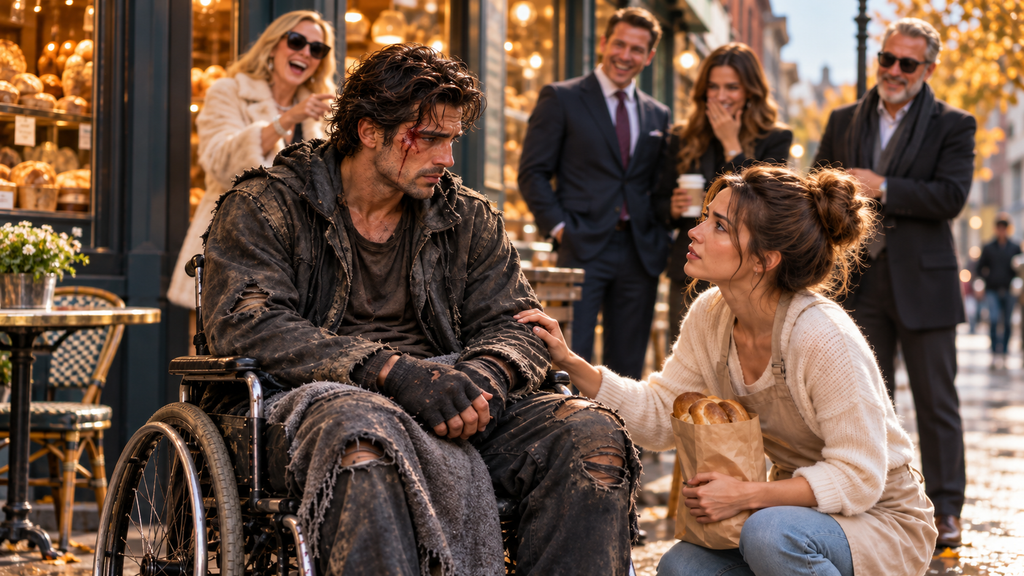
That’s how I ended up on that sidewalk.
I’d taken a bus across the city, then traveled several blocks in my wheelchair. Halfway there, rain started falling.
A passing car splashed muddy water over my clothes. My wheelchair struck a broken section of pavement, throwing me forward and reopening an old wound near my eyebrow.
By the time I reached the café, I looked like someone who hadn’t slept indoors for weeks.
People stared.
Some pretended not to see me.
Others made their opinions painfully clear.
But then someone opened the café door.
“Excuse me, sir?”
I looked up.
A young woman stood beneath the awning. She had brown hair tied into a messy bun, flour on the sleeve of her sweater, and a brown paper bag tucked under one arm.
“I’m Nora,” she said. “Do you need help getting inside?”
I shook my head.
“I’m fine.”
She glanced at my wet clothes.
“You don’t look fine.”
“I’m just waiting.”
“For someone?”
“Maybe.”
She smiled a little.
“Well, whoever it is, I hope they arrive before you freeze.”
One of the women behind her laughed.
“Be careful, Nora. He might steal your handbag.”
Nora turned around.
“He’s sitting in the rain, not planning a robbery.”
The woman’s expression changed.
Nora didn’t wait for a response.
She moved a chair away from the outdoor table, giving me enough space to roll beneath the awning.
Then she disappeared inside.
A minute later, she returned with a hot coffee and a paper bag containing two fresh rolls.
“I didn’t order anything,” I told her.
“I know.”
“I don’t have cash.”
“I didn’t ask for any.”
There was something so ordinary about the way she said it that I didn’t know how to respond.
For years, I’d heard people discuss me as if I were a scandal, a failure, or a warning to others.
This stranger simply saw a cold man who might appreciate something warm.
“Why are you doing this?” I asked.
Nora shrugged.
“My father used to say you never know what somebody had to survive before meeting you.”
I looked at her more carefully.
“Your father sounds like a good man.”
“He was.”
The past tense stayed between us.
She glanced at the cut above my eyebrow.
“There’s a first-aid kit inside. Let me help with that.”
I wanted to refuse.
Instead, I followed her.
The café was small and welcoming, with wooden tables, old family photographs, and the smell of freshly baked bread.
On the wall behind the counter hung a framed photograph of several construction workers standing in front of a half-finished building.
I recognized the building immediately.
North Pier.
My hands tightened around the wheels of my chair.
“Where did you get that photograph?”
Nora followed my gaze.
“That was my dad’s construction team. He worked there years ago.”
I felt my stomach tighten.
“Was his name Thomas Ellis?”
She slowly turned toward me.
“How do you know my father’s name?”
I looked at the picture again.
Thomas Ellis.
The electrician who had repeatedly warned management about the building’s faulty emergency systems.
The man whose final safety report had disappeared before the investigation.
And one of the five people who never came home.
Nora stared at me.
Then her eyes moved toward the old scar running along my jaw.
Her face suddenly lost its color.
“Wait a minute.”
She stepped back.
“I’ve seen you before.”
I didn’t answer.
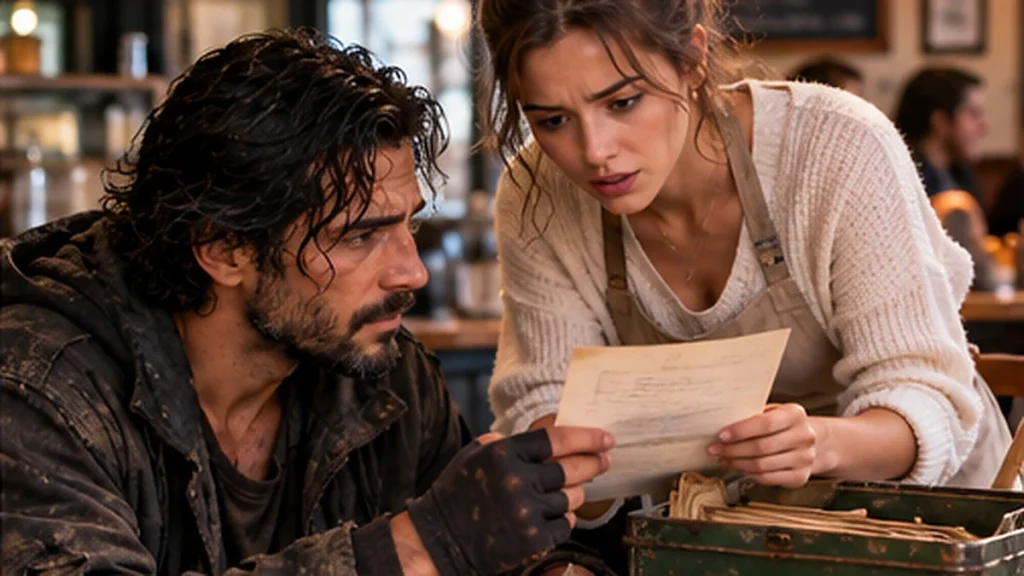
Nora reached for her phone, opened an old newspaper article, and held it beside my face.
Her voice trembled.
“You’re Adrian Mercer.”
I closed my eyes.
She whispered the words I had feared hearing for six years.
“You’re the man they said was responsible for my father’s death.”
And in that moment, I realized that the person who had shown me the greatest kindness might also have the strongest reason to hate me.